
The Stories Behind Famous Art: My 10 Favorite Museum Masterpieces Explained
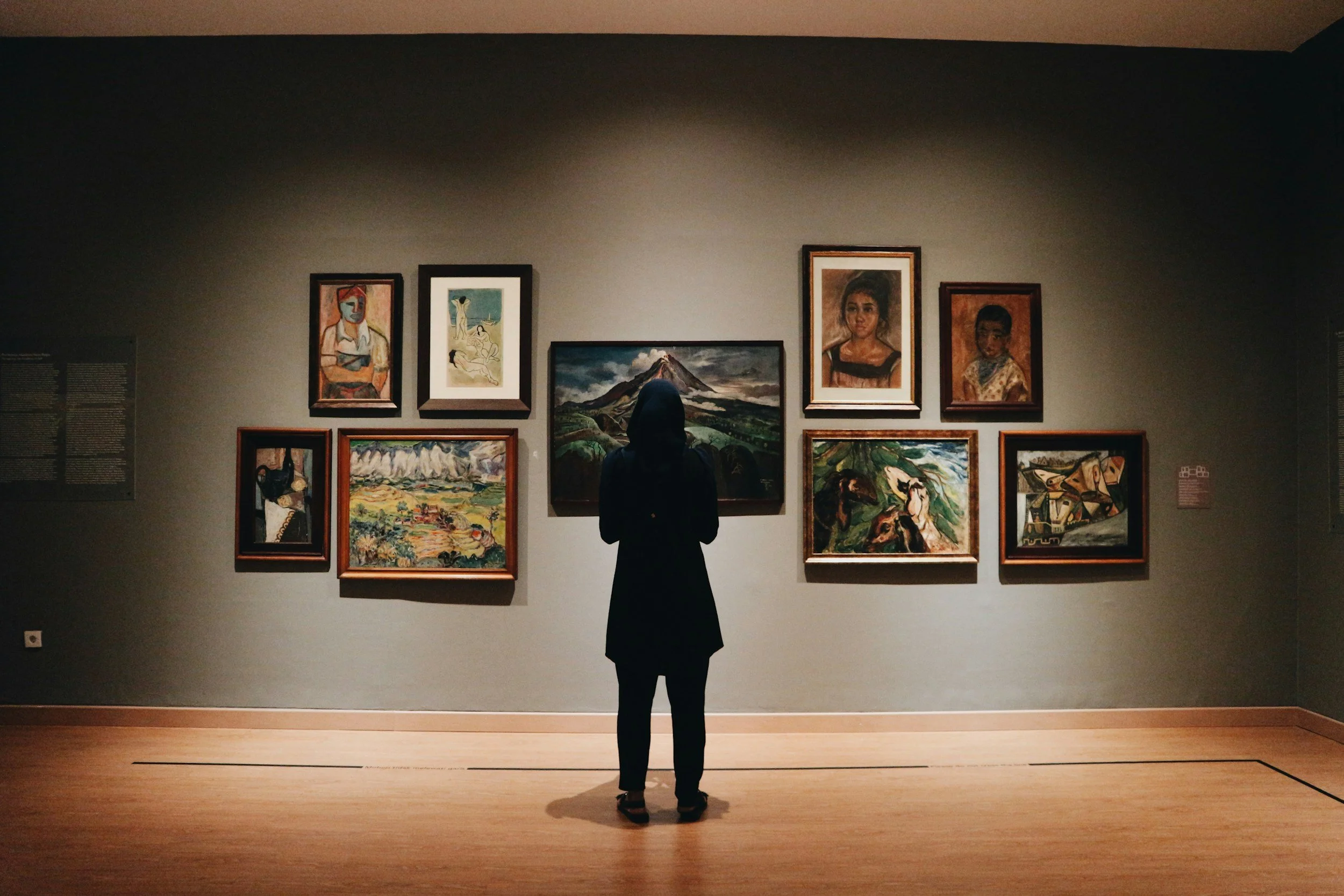
What kind of traveler are you? For me, I pencil in a couple of museums per day wherever I go. I love wandering around the galleries and taking in all the extraordinary painting and artwork from all different time periods. But if I’m being honest, most of the time I'd admire a piece, read the little plaque, and move on without really understanding what I was looking at.
The more I started digging into the stories behind some of my favorite artworks, the more I realized how much I had been missing. Every painting has a story. There are so many hidden meanings behind the work. What the artist was feeling, what was happening at that time in history and the drama of it all. I want to know the details that are behind the painting.
So, I collected some of my favorite pieces that I came across on my Europe travels and gathered the stories that made me fall in love with them. My hope is that the next time you find yourself in a museum, you'll slow down, look a little closer, and discover that there's so much more to a painting than what you see at first glance.
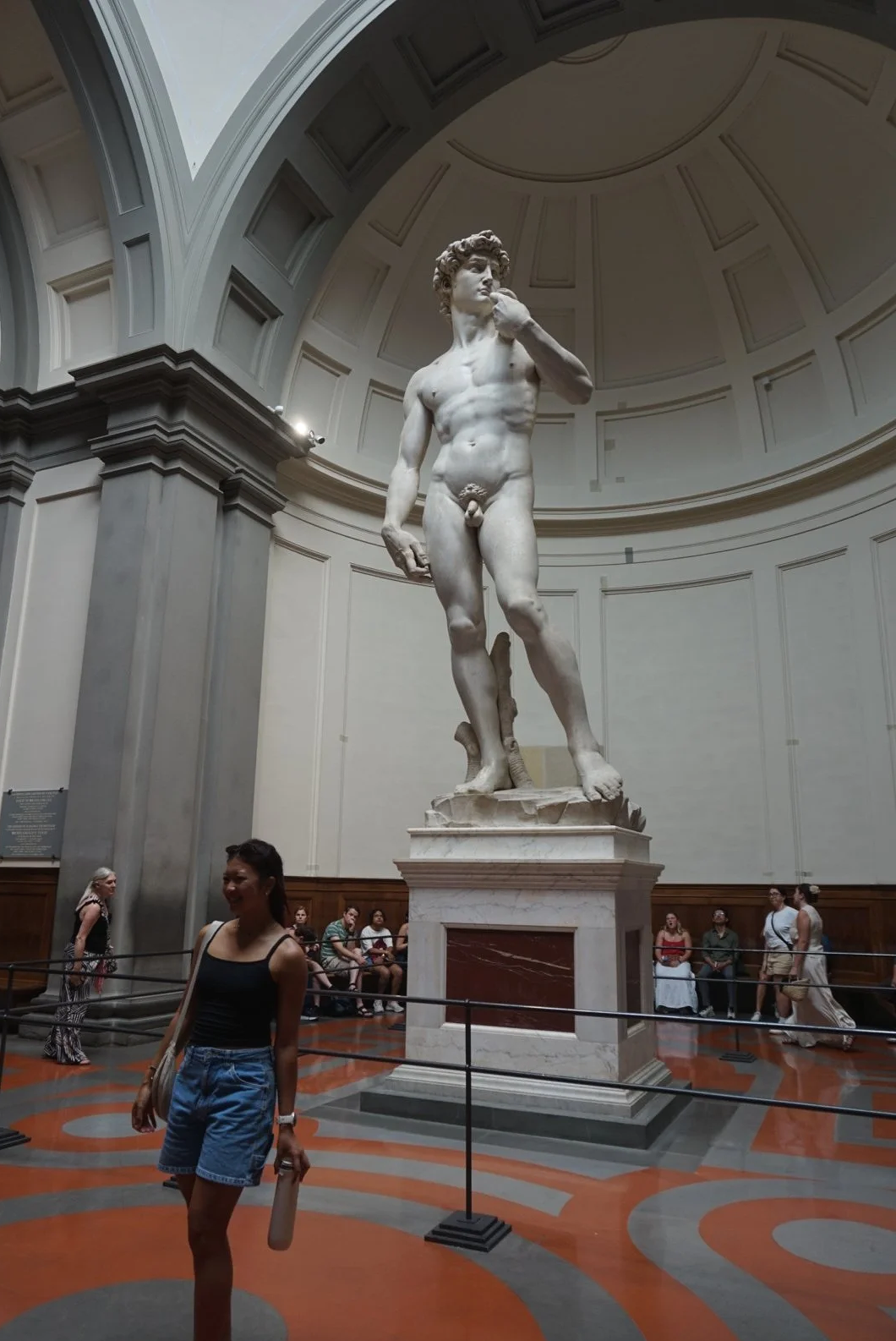
1.Michelangelo. David. 1501–1504, marble. Galleria del l'Accademia, Florence Italy
I'm starting off strong with David. He is 17 feet tall and weighs 6 tons. The picture does not do it justice. I am hoping you can tell from the girl in front of the picture that this man is huge! When you enter the museum, you take a left, up the hallway and before you even get halfway, you will see him standing tall. I was in awe! Everyone was. The detail is incredible. You could see his veins, his ribs and his heart shaped eyes so clearly. What could have made Michelangelo create such a masterpiece?
In 1464, the Opera del Duomo wanted to have a huge statue of David for the Florence Cathedral. They hired Agostino di Duccio, and he bought this marble block that was difficult to use. It had a lot of imperfections that he couldn't work with. So, he quit the job. A couple of others also tried but failed. Around 1501, Michelangelo took on the challenge. Because of his strong attention to detail and skill, he was able to get the job done, in more than 2 years time. At first the statue was placed outside the entrance of Palazzo Vecchio, as a symbol of Florence's strength and independence. In 1873, they wanted David inside, to better preserve it. They took 5 days to get it inside the Galleria dell'Accademia.
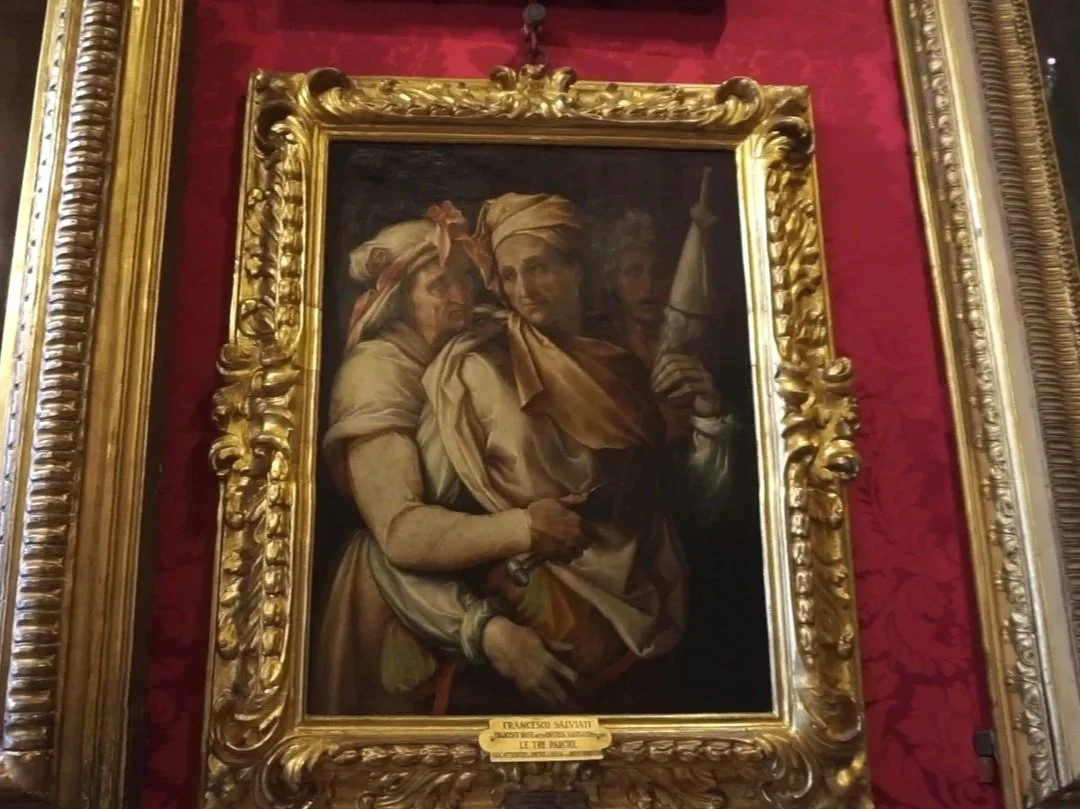
2. Francesco Salviati. Le Tre Parche (The Three Fates). 1510–1563. Uffizi Galleries, Palazzo Pitti. Florence, Italy.
This first painting that I chose is of three old women. When I saw it at first glance, it looked like one woman had a knife and was trying to stab the other, while the third was horrified. But if you look closer, the woman is holding a thread, as the other one is cutting it. The third woman looks shocked about something. To me, it looks like there is some kind of secret they are sharing. What are they hiding? And who are these ladies that were so interesting, they had to be painted? Well, that looks cool. I kept walking.
Now, I want to learn more about them. This is what I found out: Painter Francesco Salviati painted this in the 1500s. He was depicting three goddesses that controlled everyone’s destiny. During the Renaissance, people were fascinated with classical mythology. So, they are three mythological sisters, who control the destiny of every single person.
Clotho spins the thread of life.
Lachesis measures the thread, deciding how long a person will live.
Atropos cuts the thread, ending that life.
Instead of simply illustrating a myth, Salviati makes fate feel inescapable and personal. These are the beings who decide when every life begins, how long it lasts, and when it ends, the whole mood changes. The painting stops being a quiet conversation and becomes a chilling reminder that destiny is always being measured somewhere in the background. Deep.
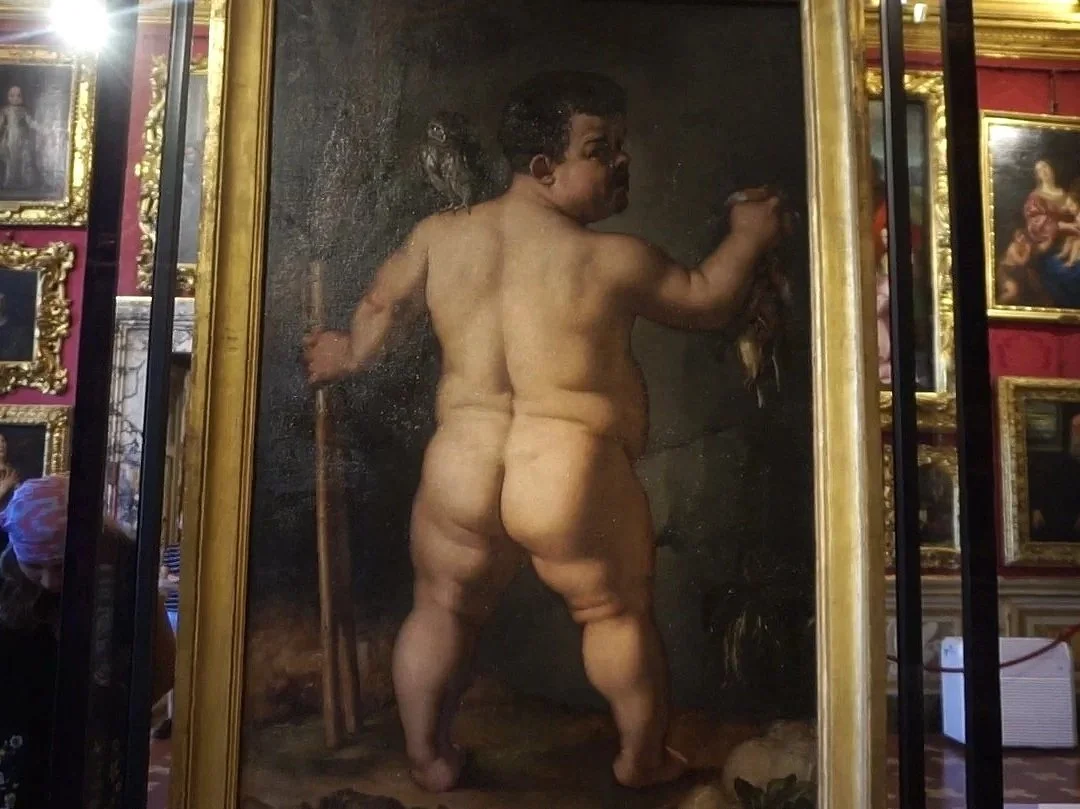
3. Agnolo Bronzino. Portrait of the Dwarf Morgante. 1552, Oil. Uffizi Galleries, Palazzo Pitti. Florence, Italy.
I’m walking space by space. Each room is filled with paintings top to bottom. But then I came across this gentleman. I laughed a little at first. It is a painting right in the middle of the room and obviously, I had to take a look. He is a short man, nude, holding a bird and an owl on his shoulder. The interesting part is when I walked around on the other side, there was another painting of him. His front side. I have never seen a double-sided painting before. It was pretty cool. But why was he painted? And why in this way?
This is Braccio di Bartolo. His nickname, Morgante, was supposed to be an ironic joke because of his size. He was the favorite entertainer for the Medici court. They say he was witty, clever and everyone loved him. He then became employed as the bird catcher, hence the birds in the painting. Cosimo (Medici family) wanted to have a painting of Bartolo. He commissioned his court painter, Agnolo Bronzino to do it. There was some kind of debate on whether sculptures were superior to paintings because it was cooler to see all angles. They created this painting to make a statement. You can make paintings cool. You can walk around it too! This seems like a meme from the Renaissance.
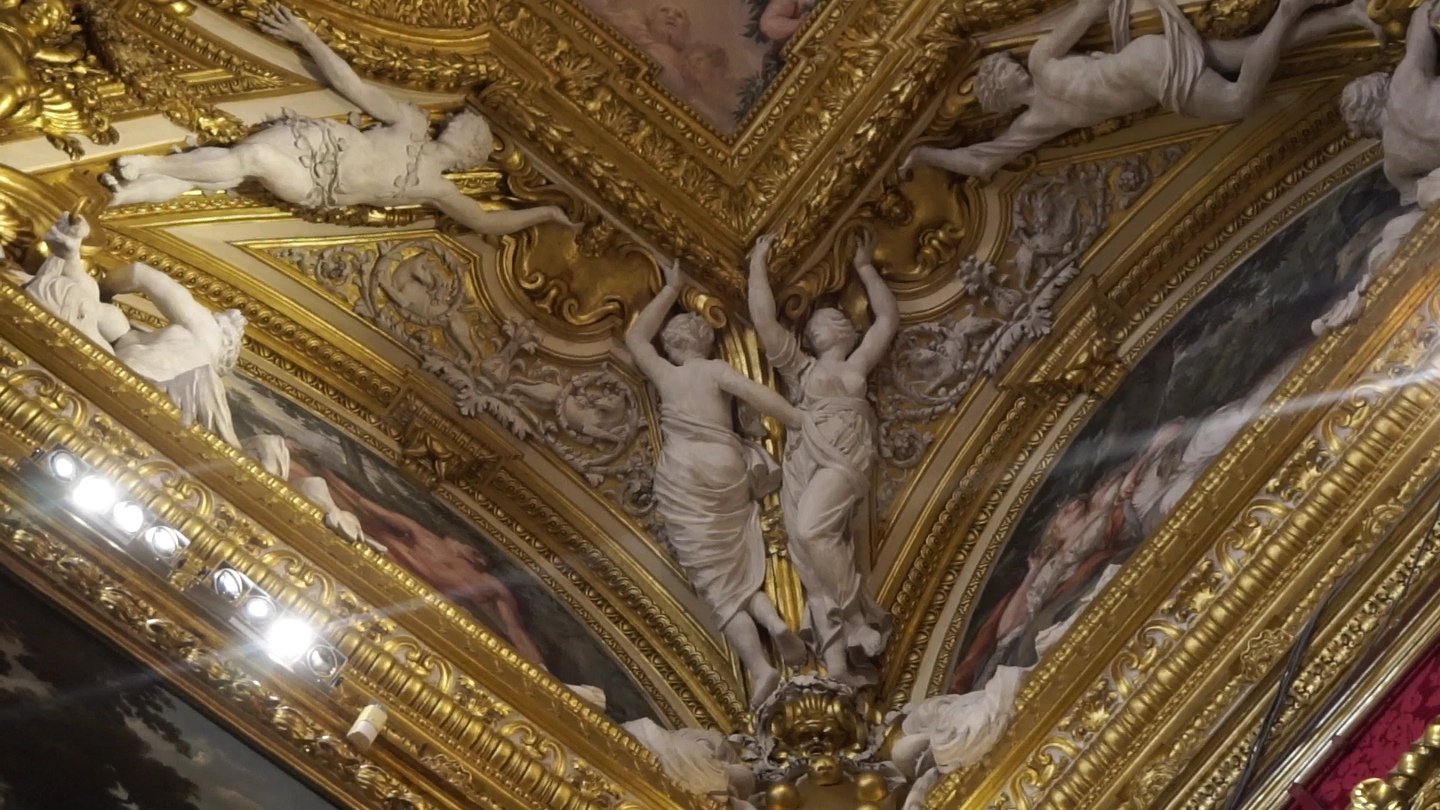
4. One of my favorite surprises at Palazzo Pitti wasn't hanging on the walls, but above my head. I didn’t know where to turn. Everywhere you looked you saw a masterpiece. There were gilded carvings, mythological creatures, angels, gods. It was all impressive. Sometimes the artwork is the room itself.
This palace used to be the private residence of the Medici family, then the House of Lorraine. They wanted to impress their guests, royalty and anyone important that stepped inside. They hired many designers, artists, and sculptures to design their home lavishly. They wanted to be seen as powerful.
**Medici Family (1434–1737) - They were a wealthy banking family. They collected many artwork from one of the largest and most successful banks in Europe.
**House of Lorraine (1737–1860) - After the Medici family died out, Lorraine family preserved those collections and continued to develop the palace.
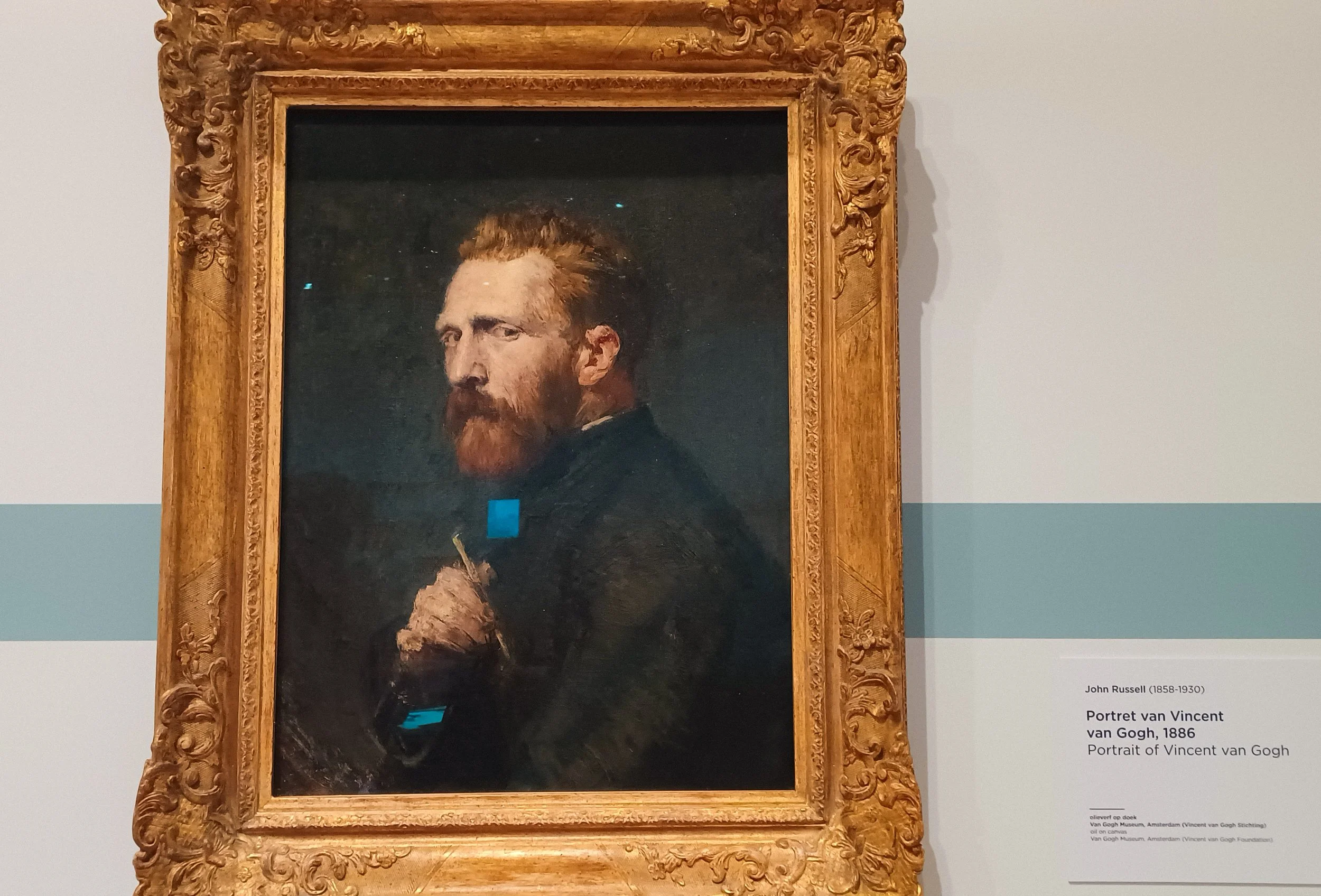
5. John Peter Russell. Vincent Van Gogh. 1886. Van Gogh Museum. Amsterdam, Netherlands.
I went to the Van Gogh Museum. It was a building dedicated to all of Van Gogh’s paintings and life story. There were so many self-portraits. He tried out different techniques and made them all unique. I especially love his flower paintings and the ones of the night sky. The museum also showcased the letters he would send to his brother. Which made me sad because in one of them he mentioned to his brother that he was the only friend he had. They loved each other very much. Anyways, there was this particular painting of Van Gogh that caught my eye. It was a little different, he also looked handsome. I wondered what the story behind this one is?
This painting was painted by his Australian friend, John Russell. They met in Paris in 1886 when he was studying art. Russell understood Van Gogh, unlike many others. In this painting Van Gogh was 33 years old. He sat down, so John could paint him. This was a way for John to express his respect and admiration for his friend. This is the painting of who Van Gogh really was, from the perspective of someone else. Van Gogh loved this painting so much he told his brother to take really good care of it. Knowing the relationship between the artist and the subject makes the painting much more meaningful. It's not just a portrait of Vincent Van Gogh; it's a portrait of him through the eyes of someone who knew him before he became one of the world's most famous artists.
**By the way, if you ever want to go to this museum or the Anne Frank House, please get your tickets a month in advance.
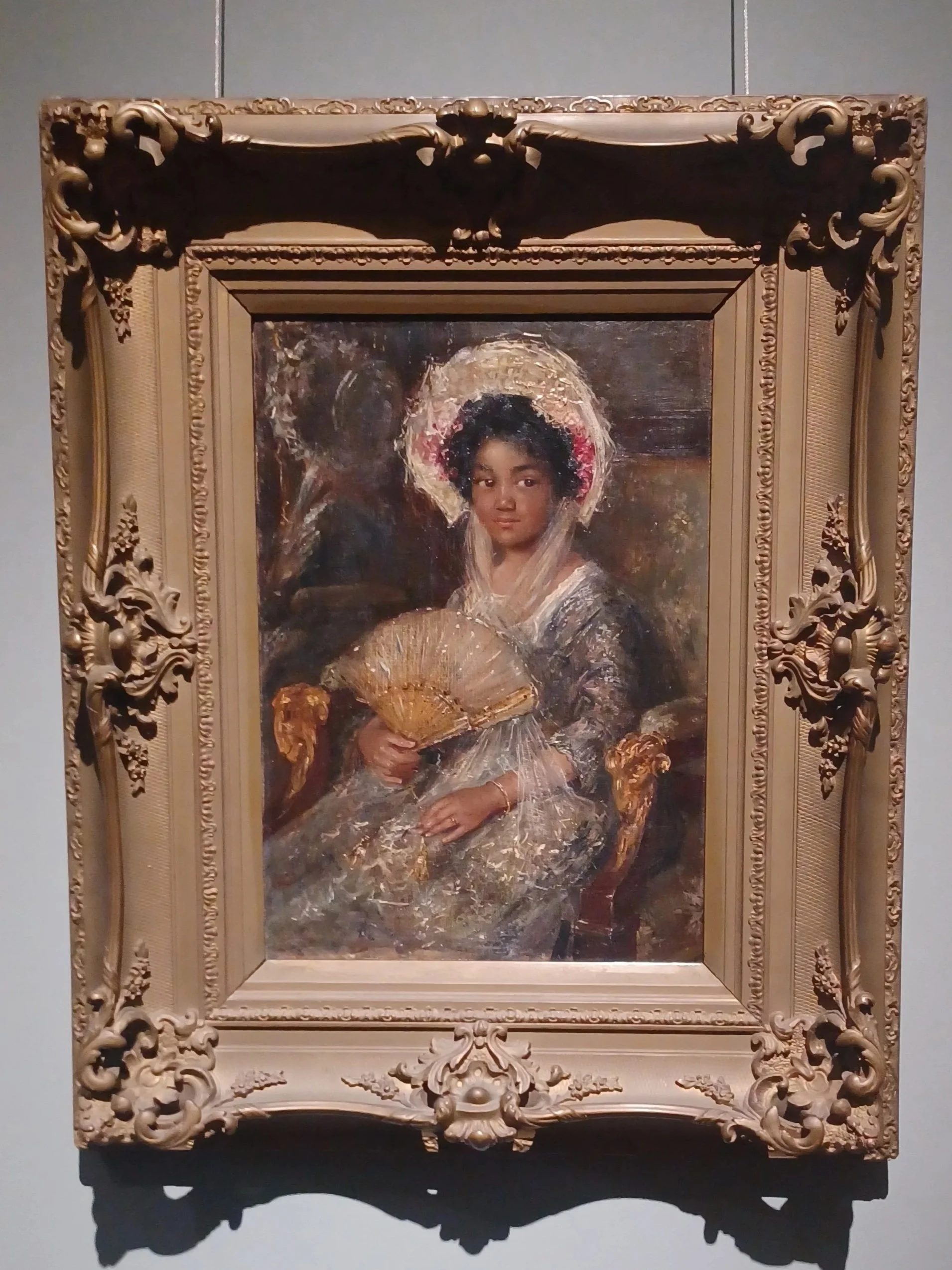
6.Simon Maris. Isabella. 1906. Rijksmuseum. Amsterdam, Netherlands.
When I saw this little girl, I thought she was beautiful. Her outfit was also adorable. Then I thought, wow imagine getting a little girl in an outfit like that and sitting for a long time to get painted in 2026. They could never! I was curious to see how long it took and who this little girl was. She seems rich so maybe there’s more to the story.
The painter, Simon Maris was one of the Netherlands' best-known portrait painters in the early 20th century. He loved painting people, especially women and children. This girl in particular is believed to have been 12 years old. Simon painted her in his Amsterdam studio. But first he photographed her and used those photos as reference. He painted many portraits of the same girl. Just like me, there are many people curious to know who she was. No one really knows. For years, researchers have been trying to figure out who the girl in the painting is. All they know is Simon called her Isabella. During that time painters would use aliases for names so we don’t even know if that was her actual name. What a mystery!
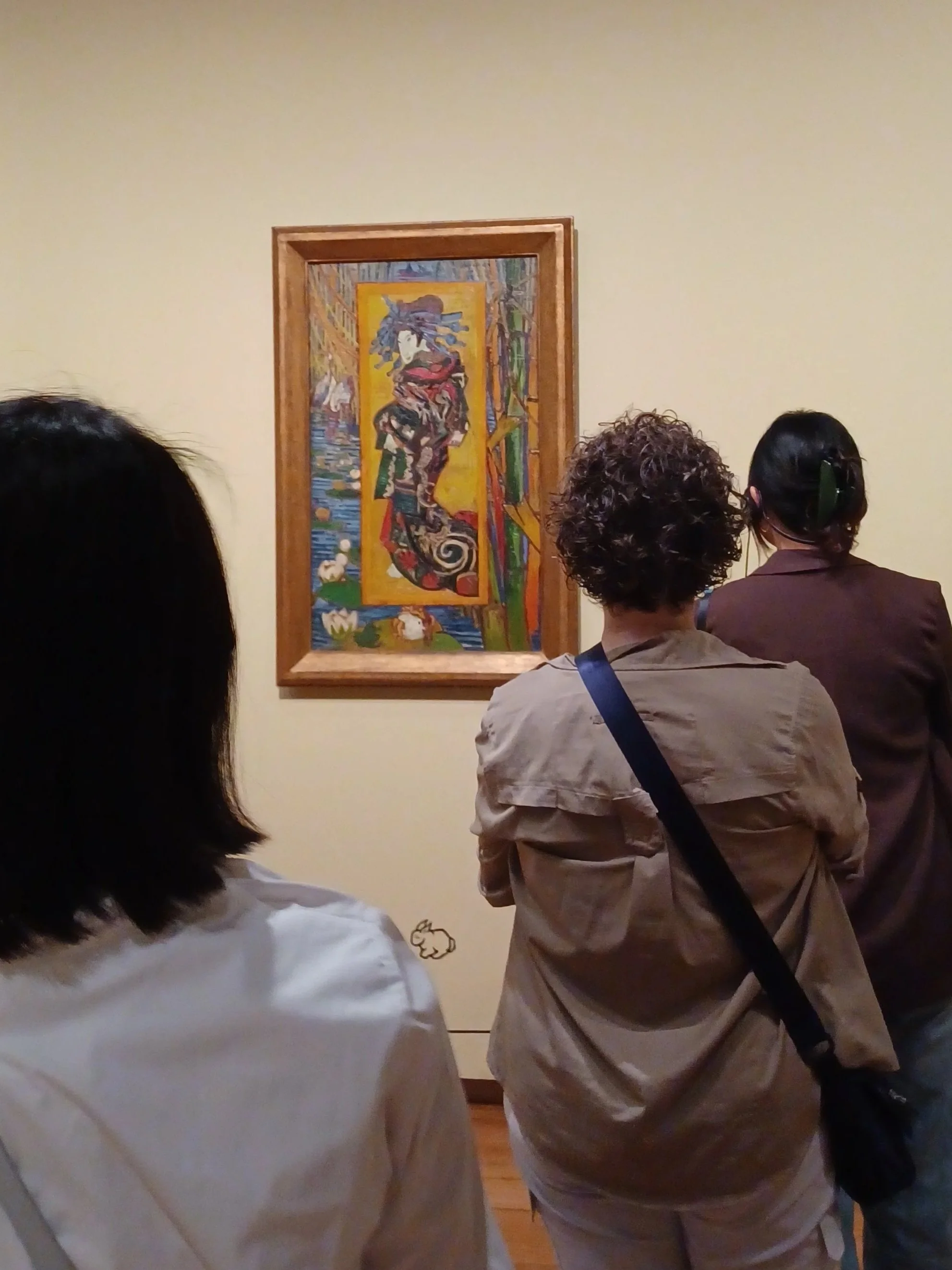
7.Vincent Van Gogh. Courtesan (After Eisen). 1887. The Van Gogh Museum. Amsterdam, Netherlands
This is one of my favorite photos that I took on my trip. I’m not sure why. Possibly because the three women all looked at this beautiful painting all at once. Or the fact that I got that rabbit in between them. Or maybe the joy I get from looking at this painting. I love color and this painting has so many! What a beautiful pond and beautiful woman. I was thinking, this is an interesting painting because it’s much different than all Van Gogh’s other works. Where did he get his inspiration from?
The original image of the woman was created by the Japanese artist Keisai Eisen and reproduced on the cover of the French magazine Paris Illustré when they featured an issue on Japan. Van Gogh liked the print so much, he printed an enlarged size and added his own bold colors and interesting border. Van Gogh didn't just copy the print, he surrounded the courtesan with a colorful border filled with Japanese-inspired imagery, including: water lilies, bamboo, cranes, and frogs. In 19th-century French slang, cranes (grues) and frogs (grenouilles) were nicknames for prostitutes. Van Gogh included them as subtle references to the woman's profession.
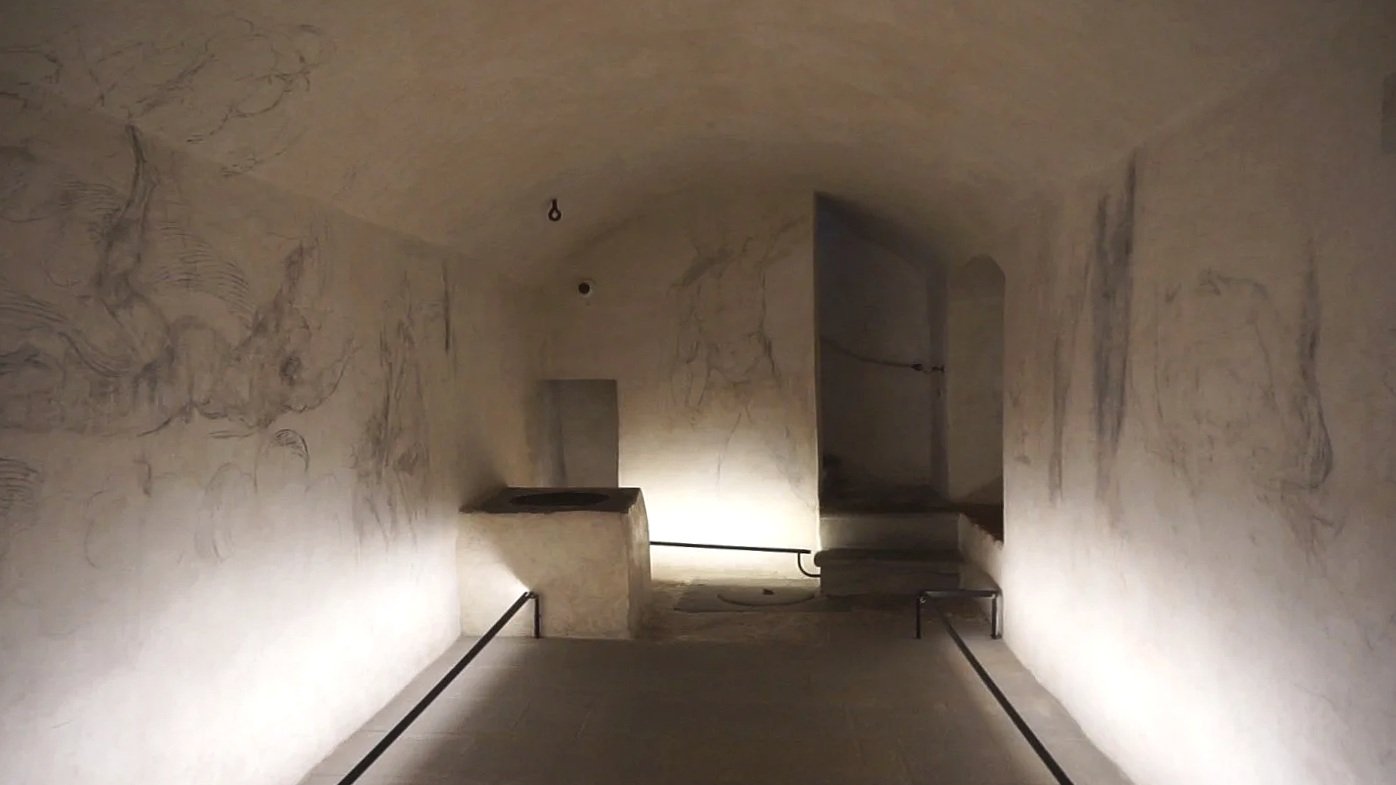
8.Michelangelo. Michelangelo’s Secret Room. 1530. Cappelle Medicee, Florence, Italy
I heard there was this secret room. Immediately I got tickets because how could I possibly miss this opportunity to see something most have not. I didn’t know what to expect or how the process would go. I went to the Cappelle Medicce and waited a few minutes until the rest of the group arrived. It was the guide and 4 visitors, which is the maximum amount per time slot. We go down these really narrow, steep stairs and inside it looks like a wine cellar or closet space. How was Michelangelo able to hide here for 2 months? I guess drawing kept him sane. This was interesting because it was like looking at a personal sketchbook of a genius.
Underneath the Medici Chapels, there is a tiny room about 33 by 10 feet. The room was unknown until 1975, when the museum director, Paolo Dal Poggetto discovered it behind a trapdoor while searching for a new exit. Conservators carefully removed many layers of plaster, and found dozens of charcoal and chalk drawings covering the walls. These drawings include: The Sistine Chapel figures, muscular male nudes, faces, anatomy, Leda and the Swan.
The story gets crazier. Michelangelo worked for the powerful Medici family, designing sculptures and architecture for their tombs in the Medici Chapels. But in 1527, Florence rebelled against the Medici and temporarily expelled them. Michelangelo sided with the Florentine Republic and even helped design the city's defensive fortifications. When the Medici family returned to power in 1530, Michelangelo felt in danger. He had openly opposed the family and now they were in power again. Supposedly, friends hid him in the tiny room for 2 months until Pope Clement VII pardoned him.
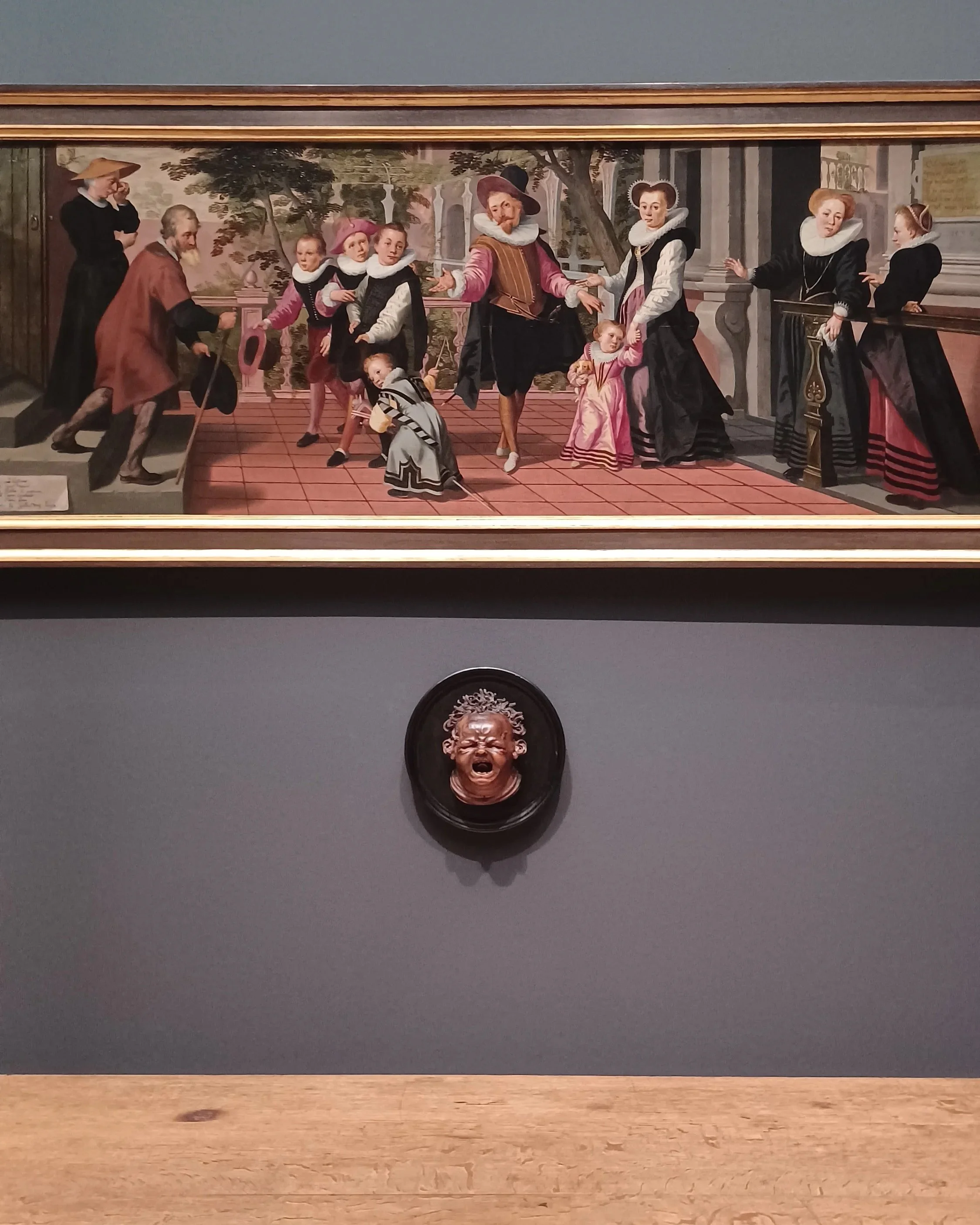
9.Attributed to Hendrick de Keyser. Screaming Child Stung by a Bee. 1565–1621. Rijksmuseum. Amsterdam, Netherlands.
There’s a lot going on here. I had to stop because the baby was crying! Just an interesting pairing between the top painting and the bottom sculpture. I just had to know why the baby was crying? It made me laugh.
I didn’t think about this before but when art historians don’t have concrete evidence on who the actual artist of an artpiece is they say it is “attributed to” and name the potential person. So for example, there is no documentation or confirmation of who created this piece but they have a strong feeling it was Hendrick de Keyser. It’s the facial expression, the carving style, the material and the form that points in that direction. They also believe this baby is Cupid. There’s a poem explaining how cupid stole the honey and a bee stung him. That is why he’s crying.
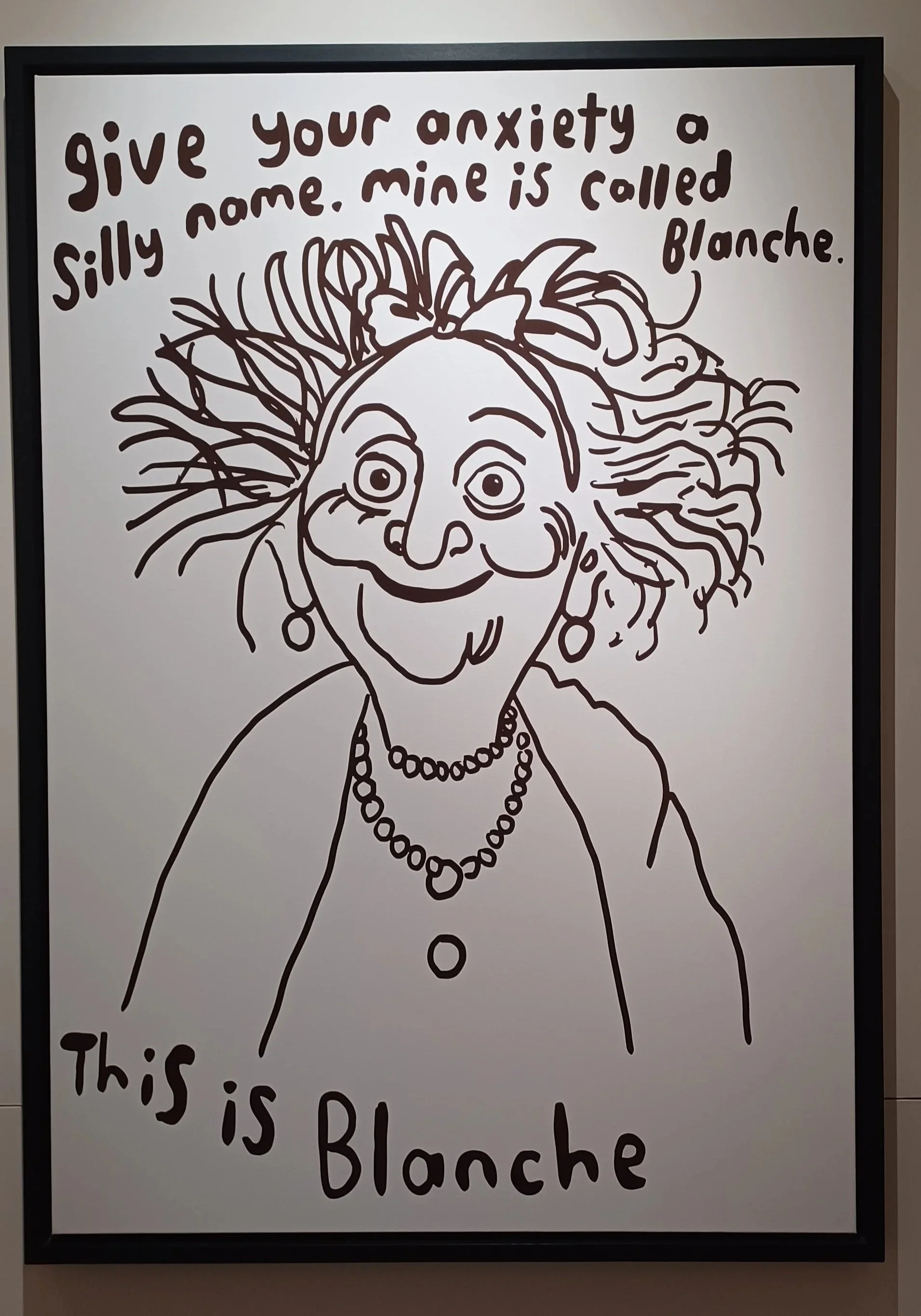
10.Robbie Williams. This is Blanche. 2020s. Moco Museum. Amsterdam, Netherlands.
I like her. This is Blanche. And Blanche is the anxiety that is inside of us. She is a little silly, and little goofy and a little anxious. Anxiety has been a horrible thing for me. It’s intrusive and loud and scary. I like this drawing because it reminds me to separate myself from my anxiety.
Robbie also suffers from mental health issues. His artwork is an extension of those conversations. Rather than pretending everything is okay, he uses humor and funny illustrations to make difficult emotions easier to talk about.
Blanche represents the voice that tells you:
you're not good enough,
people are judging you,
something bad is about to happen,
or you're going to fail.
Robbie doesn't paint anxiety as a dark cloud or a monster. Instead, he introduces us to Blanche, a quirky woman who represents the voice of self-doubt. He wants us to give anxiety a silly name, and you can take away some of its power. It's not you, it's Blanche! Oh Blanche!
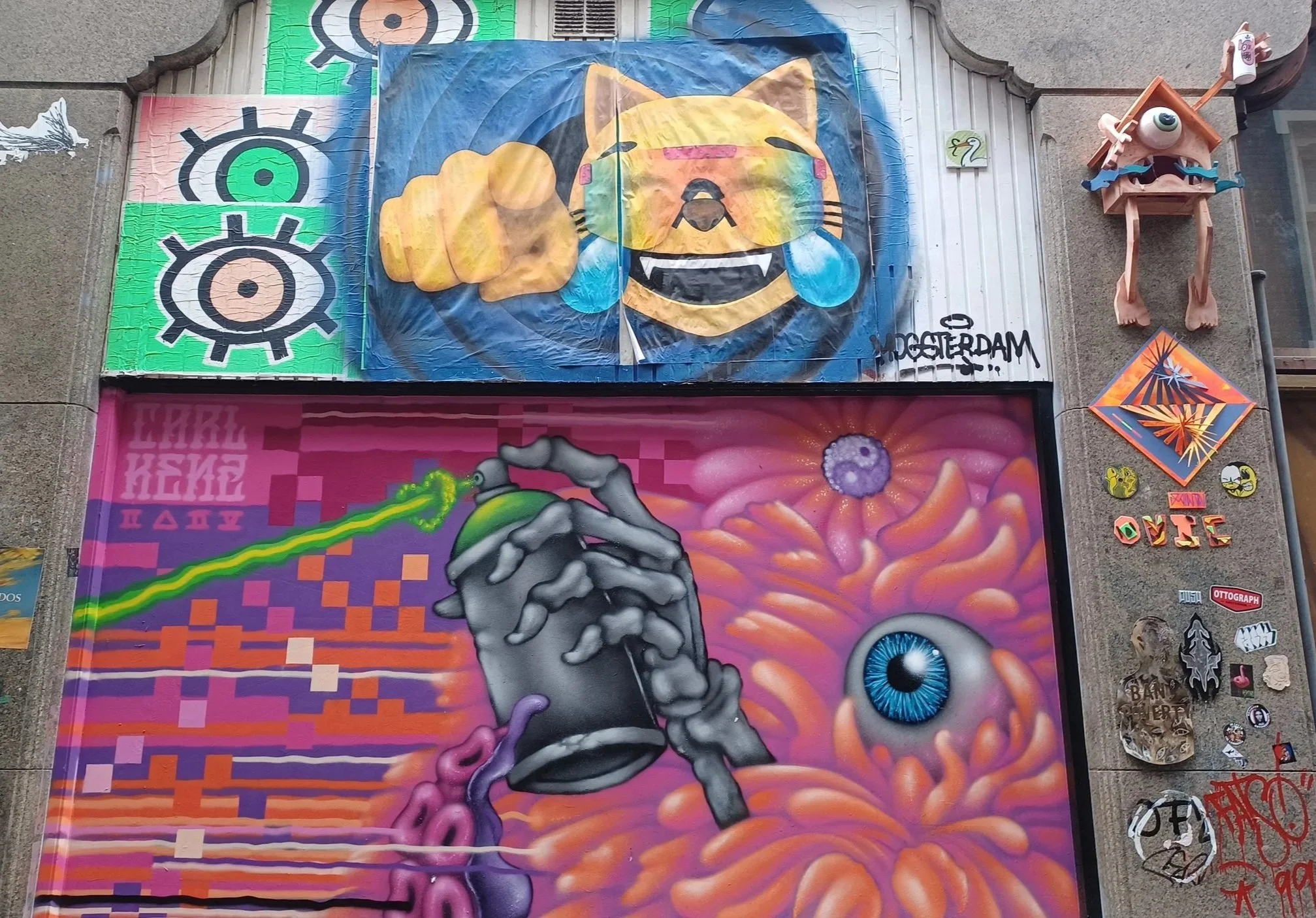
Bonus!
Art is not just in museums, it’s in everyday life. This includes street art. As I’m walking down the street to get something to eat I stumble upon this cool piece. I don’t know who did it or what it is but it caught my attention. In Amsterdam there is alot of art like this. They paint over one another so one day the painting is there, the next it’s transformed into something else. Super cool!